

The corporate tax rate determines the size of the tax what is wacc in finance shield on debt interest. Always use market values, not book values from the balance sheet. The cost of debt is the effective interest rate the company pays on all of its outstanding debt. The cost of equity is the return that shareholders require for investing in the company. Market values of equity and debt are preferred because they reflect current investor expectations and opportunity cost.
WACC is the appropriate discount rate for the entire firm’s cash flows. If you are discounting equity cash flows (FCFE), you would use the cost of equity instead. Yes, in most DCF analyses, WACC is used as the discount rate when calculating the present value of future free cash flows to the firm (FCFF). Calculating WACC for a private company is more challenging because market values are not publicly available. In DCF analysis, all future cash flows would be discounted at 8% when calculating the company’s intrinsic value.
More specifically, WACC is the discount rate used when valuing a business or project using the unlevered free cash flow approach. WACC is used in financial modeling as the discount rate to calculate the net present value of a business. A firm’s Weighted Average Cost of Capital (WACC) represents its blended cost of capital across all sources, including common shares, preferred shares, and debt. In valuation work, WACC becomes your discount rate in DCF models.
The average rate that a company is anticipated to pay for financing its assets, incorporating both debt and equity costs, is represented by WACC, a holistic measure. To compute the cost of equity in the context of Weighted Average Cost of Capital (WACC), the Capital Asset Pricing Model (CAPM) is employed. Valuable insights into the cost of equity are provided by both methods, which is crucial for the precise calculation of WACC. Several techniques exist for estimating the cost of equity, with the Capital Asset Pricing Model (CAPM) being among the most commonly utilized. WACC is significant as it serves as an essential instrument for evaluating the cost of capital related to new investments and projects. The average return rate that a company is expected to provide to its security holders for financing its assets is reflected in the Weighted Average Cost of Capital (WACC), a key financial metric.
The corporate tax rate reduces the effective cost of debt because interest payments are tax-deductible. WACC serves as the discount rate in valuation models like discounted cash flow (DCF), guiding executives on funding decisions and helping investors determine the minimum return needed to justify investment risks. WACC reflects the true cost of financing your business by blending equity and debt costs proportionally. You then estimate the cost of equity—often via models incorporating R-squared for beta reliability—and the cost of debt, adjusted for taxes. WACC calculation starts by identifying the market values of equity and debt to find their proportions relative to total capital.
We understand that a single WACC figure rarely tells the complete story of a business’s cost of capital. Your stable infrastructure business operating in a mature market shouldn’t face the same hurdle rate as your high-risk emerging technology venture. Using accounting values instead of market values is like navigating with a map from 1950—the landmarks might be the same, but the landscape has completely changed. This analysis showed that modest changes in capital structure or interest rates wouldn’t dramatically alter their hurdle rate, giving leadership confidence in the 9.6% figure for decision-making purposes. This tax shield effectively reduces your cost of debt by your tax rate.
The WACC (Weighted Average Cost of Capital) Formula
The yield to maturity (YTM) is the rate at which the current price of the bond is equal to the present value of all future cash flows from the bond. These three approaches all take into account the tax rate (t) to determine the after-tax cost of debt, which is used in the WACC formula. To estimate the before-tax cost of debt, there are generally three approaches you can take of varying simplicity and accuracy. This is simply because equity shareholders bear more risk than bondholders, and therefore require a higher rate of return than debtholders. Moreover, if Adobe did not issue preferred shares or had no debt, then CAPM would just be equal to the WACC (the discount rate).
Identify Market Values of Equity and Debt (Not as Simple as It Sounds)
WACC is a calculation derived from the capital structure and market pricing, whereas a hurdle rate is a management decision about the minimum acceptable return for capital allocation purposes. WACC and hurdle rate are often used interchangeably, though they are not the same thing. The cost of equity is estimated using a model that assumes markets are efficient, investors hold diversified portfolios, and the only risk that is priced is systematic. Small changes in the discount rate can materially alter the implied value, which is why presenting a single-point WACC without sensitivity analysis understates the uncertainty embedded in the valuation. This interaction between WACC and transaction pricing is examined further in EV/EBITDA multiples by buyer type, which shows how differences in the acquirer’s cost of capital translate into differences in the multiples they are willing to pay. The table below shows WACC estimates for a selection of industries from Aswath Damodaran’s global cost of capital dataset, published January 2026.

This rate provides a more accurate measure of the cost of debt compared to the nominal interest rate. By using YTM as the cost of debt, companies can more accurately reflect the true cost of borrowing in their WACC calculations. When calculating the Weighted Average Cost of Capital (WACC), YTM plays a vital role in determining the cost of debt. Since interest expenses are tax-deductible, the after-tax cost can be calculated by multiplying the cost of debt by (1 – tax rate).
For instance, consider two sources: equity and debt. The term ‘cost of equity’ in the WACC formula denotes the return that investors expect on the company’s stock. In this scenario, the formula would indicate that the cost of equity is multiplied by 1.0, leaving it unchanged. When a company has zero debt, the cost of equity is equivalent to the WACC.
This measure indicates the necessary return on investment for both equity and debt holders, shedding light on the total financing cost of a company’s operations. The Weighted Average Cost of Capital (WACC) serves as a financial indicator that signifies a firm’s average after-tax capital cost from all sources, including equity and debt. Nevertheless, increased leverage elevates financial risk, ultimately raising the costs associated with both equity and debt.
If your company’s rate of return is higher than the WACC, it is profitable (see ROI calculator). Generally, it is assumed that the cost of equity is all the expenses you need to bear to convince your stakeholders that your company is worth investing in. In the case of the cost of equity, the calculations are not so straightforward. The cost of debt is pretty straightforward – you always have to give back more money than you borrowed. If you already know how to calculate WACC, be sure to take a look at its real-life application in the discounted cash flow calculator.
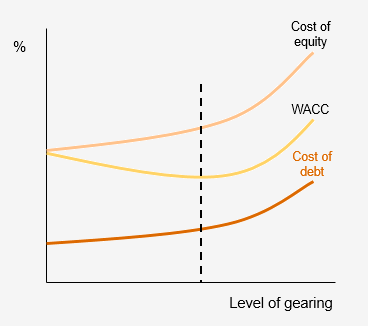
Changes in capital structure directly affect WACC because debt and equity have different costs. Analysts often adjust the discount rate or use alternative methods such as APV to better reflect project-specific risk. This is a critical metric for investors to analyze when assessing a company’s discounted cash flow or overall valuation. A high WACC indicates that financing costs are higher and reduces the valuation of any given project through discounted cash flow analysis. WACC is calculated as a weighted average of all sources of capital, including debt and equity, used to finance investments.
In other words, DCF (discounted cash flow) attempts to determine what an investment is worth today based on its future expected cash flows. Past that, analysts can use the WACC when evaluating internal investments, as the aforementioned metric provides interested parties with a company’s opportunity cost of capital. The WACC can serve as a hurdle rate, meaning the bare minimum return that an investment or project must return in order to be justified by the interested parties. Add those two figures together and multiply the result by the business’s corporate tax rate.